Three distinct forces collided this week: a specialized AI model that reframes what "AI for business" actually means, a Google ad surface expanding into new geographies right before the holiday push, and a pair of Meta platform moves that will visibly change advertiser dashboards before Black Friday. Each deserves attention on its own terms.
OpenAI Launches GPT-6 Cyber — A Purpose-Built Security Model
On November 5, OpenAI released GPT-6 Cyber, a version of its GPT-6 Astra model trained specifically for authorized vulnerability research. The headline numbers are striking. On the ExploitGym benchmark — which tests whether models can find and exploit specified vulnerabilities — GPT-6 Cyber scored 48.5%, up from 32.1% for its predecessor GPT-5.6 Cyber. OpenAI's own researchers used it to surface 81 previously unknown high-severity Firefox vulnerabilities and develop working exploits for 948 Linux kernel flaws, disclosing findings to the relevant maintainers before release.
Access is tightly restricted. The model carries a "Critical" rating under OpenAI's Preparedness Framework, and it's available only to vetted Daybreak Red customers with identity verification, SSO, and API IP allowlisting in place. This won't show up in anyone's ChatGPT account next week.
For marketers, the direct relevance is narrower — but real. Any team running performance campaigns at scale is handling customer data, pixels, conversion APIs, and third-party integrations, all of which carry security exposure. AI purpose-built for finding vulnerabilities raises the floor on what "good enough" security hygiene looks like. If your agency or client hasn't audited its data infrastructure recently, that conversation is overdue. Beyond the immediate security question, GPT-6 Cyber signals something worth tracking: AI specialization by domain is accelerating, and "general-purpose AI" is no longer the only frame for evaluating these tools.
Google AI Mode Ads Hit India — and Multiturn Ads Launch in the US
Google's October 28 announcement continued reshaping the ad landscape through the first week of November. Ads in AI Mode are now live in ten new countries — Australia, Canada, India, Kenya, Malaysia, New Zealand, Nigeria, Pakistan, the Philippines, and Singapore — with Brazil, Mexico, and the UK expected to follow later in Q4.
The India expansion is worth pausing on. Any Search or Shopping campaign already targeting Indian users is now eligible to serve inside AI Mode, with no separate opt-in required. That's a materially new placement for campaigns that weren't designed with it in mind.
At the same time, Google launched multiturn ads in the US: sponsored results that can appear in follow-up questions within an ongoing AI Mode conversation, not just the opening query. A Google spokesperson described them as ads that "show up on responses to follow-up user queries as users engage in back-and-forth conversations." Google has noted that AI Mode queries average three times the length of traditional searches — and longer, more specific conversations tend to reflect higher buyer intent. For high-consideration categories like BFSI products, insurance, or real estate, that makes multiturn ad placement potentially very efficient.
There's no separate opt-out from AI Mode for existing campaigns. Advertisers who want to influence where they appear should focus on tightening product feeds, ensuring landing pages answer specific questions well, and reviewing campaign tracking before this surface scales further into Q4.
Meta's Pixel Gets a New Conversion Default on November 12
Starting November 12, a Meta Pixel setting called "Measure conversions on customer devices" switches on by default for all eligible pixels outside the EU and UK. The mechanism: instead of a purchase being matched exclusively on Meta's servers, the match between an ad view and a completed transaction happens on the shopper's own device, using information — such as an email address — that the customer already shared with the advertiser. Meta says the matching inputs stay on the device; it only receives confirmation that a purchase occurred and which campaign to attribute it.
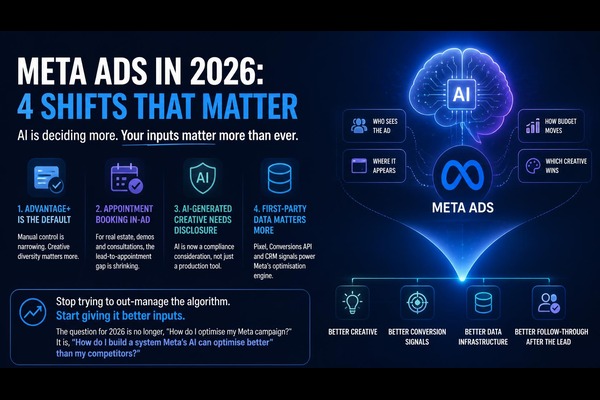
Reported conversions will likely rise after November 12. That's a measurement change, not a performance improvement — Meta can now count purchases it previously couldn't connect to an ad. The distinction matters enormously heading into Black Friday. Any jump in reported conversions the week of November 12 should be verified against actual revenue before anyone celebrates. Annotate the date in every reporting dashboard now. The opt-out sits in Events Manager, per-dataset, and requires a deliberate decision — doing nothing is itself a choice to leave the default on.
Meta's Controversial Ad Terms Are Paused — For Now
Also on November 5, Meta indefinitely paused four sets of updated business and ad terms that had been scheduled to take effect on November 20: the Commercial Terms, Product Catalog Terms, Self-Serve Ad Terms, and Ad Creative Generative AI Terms. The proposed terms had drawn sharp criticism for clauses that would have allowed Meta to send automated crawlers to the websites of any business using its advertising tools — effectively expanding its data collection far beyond the platforms themselves.
The pause followed a temporary injunction from a Norwegian court supported by 180 media companies, alongside an announced investigation by the UK Competition and Markets Authority. Meta took down the preview link and posted a Business Help Center notice stating the updates "are now paused and will not take effect on November 20, 2026" — with no new date given.
Paused is not withdrawn. Meta has committed to consulting stakeholders further, which makes a revised version of these terms likely rather than optional. Businesses that rely heavily on Meta for lead generation or ecommerce should keep the original scope of the proposed terms in view — a future version may still include data-sharing provisions that require legal and policy review before acceptance.
The Week in Sum
Specialized AI, expanding AI search ad surfaces, and measurement defaults shifting under advertisers' feet — all before the holiday season peaks. The pattern across all four stories is consistent: platforms are moving faster than most teams are updating their tracking, their creative processes, or their data policies. Audit your Meta Events Manager before November 12. Check AI Mode eligibility across your active markets. Stay current on what's actually changed in platform terms, not just what's been announced. The teams doing that work now will be in a meaningfully stronger position through Q4 than those catching up in December. Transformics's paid media and data infrastructure teams live inside exactly these kinds of cross-platform questions week to week — if your November setup needs a second set of eyes before the holiday push, reach out.
Need help getting found by AI search?
Transformics helps brands future-proof their content strategy through AEO, structured data, and AI-friendly copywriting.
Talk to our team