The Numbers That Deserve a Second Look
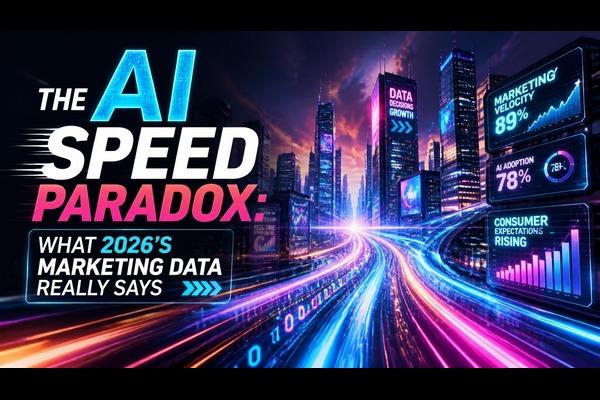
Ecommerce brands collectively increased their median monthly social ad spend by 70% year-over-year in Q2 2026 — from $16,426 to $27,966 — while cost per click fell 18% to $0.133, the lowest of any industry tracked. Click-through rates climbed 29% in the same period. That's Emplifi's finding from its Q2 2026 Social Ads Benchmark Report, drawn from anonymized data across more than 7,700 Meta ad accounts globally.
Sit with that combination for a moment. More spend. Better efficiency. Lower cost per click. In a year when most marketers are bracing for platform inflation, ecommerce brands appear to be running in the opposite direction — and winning. Why, and can D2C brands in India replicate the same logic?
What's Actually Driving the Efficiency Gain
The straightforward read here is that brands are spending smarter, not just more. Social commerce as a channel is maturing. eMarketer projects US social commerce sales crossing $100 billion for the first time in 2026, and platforms have responded by building cleaner purchase journeys — in-app checkout, native storefronts, live shopping infrastructure. The gap between ad impression and completed purchase has narrowed, which structurally improves CTR and ROAS even if CPM holds firm.
There's a creative dimension too. Indian D2C brands like boAt have demonstrated this clearly: shifting to AI-assisted creative testing and systematic fatigue management drove roughly 35% CTR improvement and a 22% reduction in CPA on Meta, with ROAS holding steady through peak sale windows. The win had nothing to do with audience targeting. It came from creative volume and iteration speed — the lever most brands underinvest in while obsessing over bid strategies.
Globally, social commerce is growing at a 31% CAGR on mobile alone. Brands that set up TikTok Shop and Instagram Shopping as genuine storefronts — not awareness channels bolted onto an existing funnel — are compressing the path to purchase. That compression shows up as cheaper, higher-intent clicks.
India's CAC Problem Makes This More Urgent, Not Less
Here's the uncomfortable context for Indian D2C founders: Meta ad CAC in India rose roughly 32% year-over-year, climbing from around ₹380 in 2025 to ₹502 in 2026, according to aggregated data from over 200 Indian D2C brands. Beauty brands have it worse — actual CAC in many categories has ballooned to ₹800–₹1,200 per customer. In Delhi NCR, heightened advertising competition inflates CAC up to 50% above other metros.
The unit economics break fast at those numbers. First orders are unprofitable for 78% of Indian D2C brands — the average brand only becomes profitable at the 2.3rd order. When you're paying ₹800 to acquire someone for an ₹800 AOV product, the math only survives if that customer comes back. Most don't, without deliberate retention infrastructure in place.
The global benchmark data from Emplifi suggests the brands winning on paid social are doing something different from simply scaling budgets. They're investing in the full post-click journey — better landing pages, smoother mobile checkout, post-purchase sequences — so the same ad spend converts into higher-LTV customers rather than just cheaper clicks on a leaky funnel. That's a systems problem, and it requires a systems fix.
First-Party Data: The Quiet Moat
Every data source in 2026 points the same direction on this: first-party data has stopped being a nice-to-have infrastructure project. It's the variable separating brands running efficient paid channels from those subsidizing platform growth at their own expense.
Mamaearth's shift to Google Performance Max — unifying search, shopping, display, and YouTube into a single system fed by CRM and first-party customer data — cut CAC by roughly 18% and lifted conversion volume by 40%. The technical setup was straightforward. The differentiator was data quality: clean product feeds, benefit-driven titles, category-specific landing pages. Brands that plugged weak data into the same system saw flat or negative results.
The principle extends to retail media. India's retail media ecosystem — Myntra Ads for fashion, Nykaa for beauty, Flipkart and Amazon India for electronics, quick commerce apps for impulse categories — runs on retailer first-party purchase data. Targeting is based on what shoppers actually bought, not what they clicked or liked. For D2C brands trying to reach high-intent buyers without cookie-dependent signals, retail media's closed-loop attribution is structurally more reliable than open-web display. Retail media is growing at roughly 2x the pace of search advertising in 2026, and brands that already sell on these platforms should treat the ad inventory as a second conversion layer — not a separate channel silo they evaluate in a separate spreadsheet.
Where to Actually Put the Next Rupee
The benchmark data points to a specific priority order, even if every brand's situation differs.
- Fix conversion rate before scaling spend. Most Indian D2C brands convert at 1–1.8%. Top performers hit 3–3.5%. That gap is a checkout and landing page problem, not an audience problem. Close it, and you halve your effective CAC without touching your ad budget.
- Build owned channels with urgency. WhatsApp post-purchase sequences generate 8–15% conversion rates on complementary product recommendations for Indian D2C brands — at near-zero marginal CAC because the relationship is already owned. Email, SMS, and loyalty programs compound over time in ways paid channels simply cannot.
- Tier-2 and tier-3 geography is genuinely underpriced. CPMs in cities like Jaipur, Lucknow, and Indore run 40–60% lower than Mumbai or Delhi, and logistics infrastructure has improved enough to serve these markets reliably. Brands anchored to metro audiences are competing in the most expensive auction in Indian ecommerce.
- Creative is the performance lever, not just the aesthetic one. Volume of creative variants tested per week matters more in 2026 than bid strategy sophistication. AI tools have made this cheaper and faster; the constraint is usually internal process, not tool access.
The India D2C market is valued at $108.76 billion in 2026, growing at a 24.3% CAGR toward a projected $322.1 billion by 2031. The brands capturing a disproportionate share of that growth won't be the ones that simply outspend rivals on Meta. They'll be the ones that built first-party data infrastructure early, kept retention tight, and treated paid social as one demand-generation input within a broader system — not the whole system.
That integrated build — performance media working alongside WhatsApp and email retention, creative production, and measurement that doesn't collapse when platform attribution rules shift — is where Transformics spends most of its time with ecommerce and D2C clients. The brands we see growing profitably in 2026 share one trait: they stopped measuring success at the click and started measuring it at the second purchase.
Need help getting found by AI search?
Transformics helps brands future-proof their content strategy through AEO, structured data, and AI-friendly copywriting.
Talk to our team